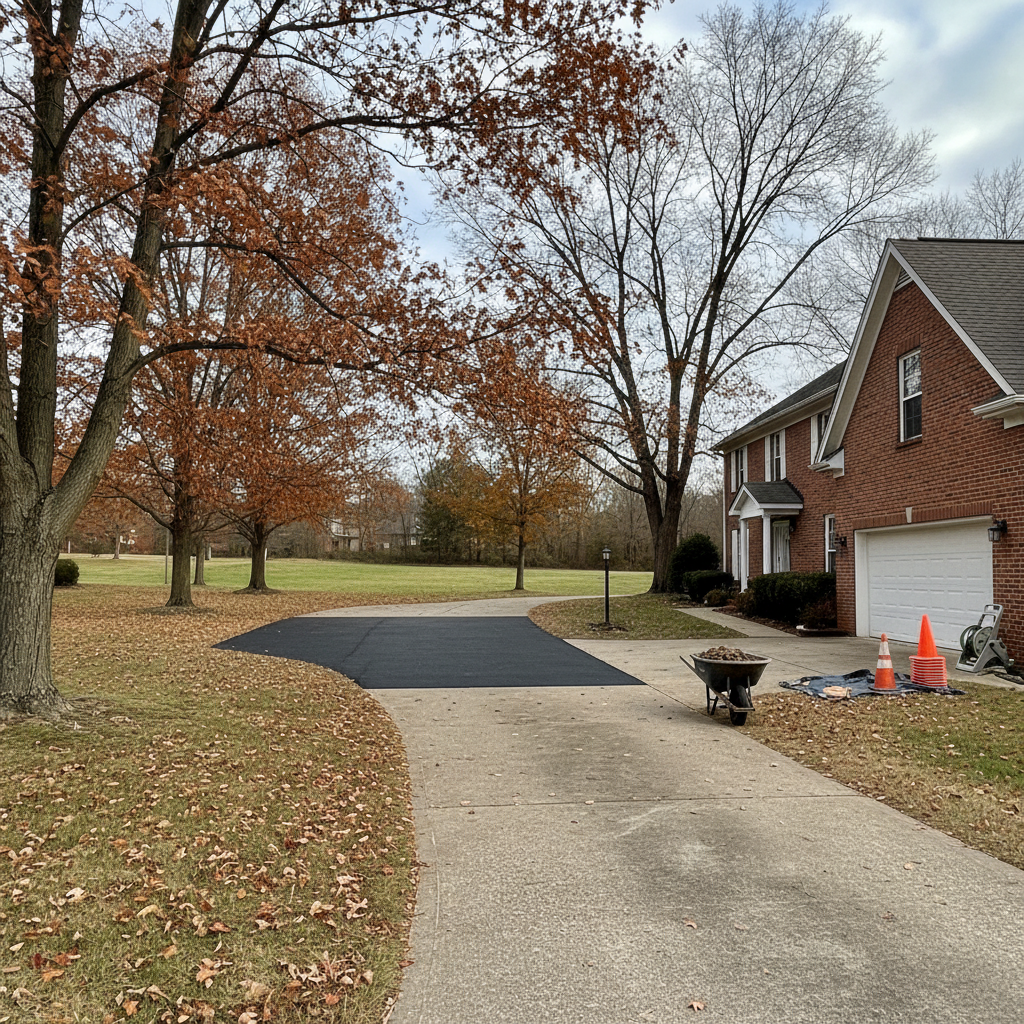
Alright, let's talk about patching up your asphalt here in Louisville. It's one of those things homeowners and business owners often put off, but trust me, a small crack today can turn into a big, expensive pothole tomorrow. And with our crazy Kentucky weather, 'tomorrow' can come a lot faster than you think.
When's the Best Time for Asphalt Patching in Louisville?
You're probably wondering, "When should I even bother calling someone about this?" Good question. The truth is, there's a sweet spot for asphalt patching, and it mostly comes down to temperature. Think of it like this: asphalt needs to be workable, and the ground needs to be stable for a good, lasting repair.
Generally, I tell folks spring and fall are your best bets around here. Once the deep freezes of winter are gone and the ground has had a chance to dry out and stabilize, that's prime time. We're talking consistent daytime temperatures above 50°F (10°C). This allows the asphalt material to properly compact and bond with the existing pavement. If it's too cold, the material won't cure right, and you'll end up with a patch that just crumbles away in a few months. That's a waste of your money and my time, and we don't want that.
Fall is also great, after the scorching summer heat breaks but before the really cold nights set in. You want to get those repairs done before winter's freeze-thaw cycles start doing serious damage to any existing cracks. Those cycles are brutal on pavement, especially in areas like the Highlands or St. Matthews where older, established driveways might have some minor settling issues already. You know the kind.
What Weather Conditions Affect Patching Work?
Beyond just temperature, other weather conditions play a huge role in how well an asphalt patch will hold up. Here's what we're always watching for:
- Rain and Moisture: This is a big one. You simply cannot patch asphalt effectively on a wet surface or if it's actively raining. The patch material won't stick properly to a damp base, and you'll get a weak, short-lived repair. We need a dry surface, plain and simple. That means if we've had a few days of heavy rain, we might need to wait for the ground to dry out completely before we can even think about starting.
- Extreme Heat: While we need warmth, too much heat can also be an issue, especially for certain types of patching materials. On those really sweltering Louisville summer days, when it's 95°F and humid, the asphalt can become too soft, making it harder to compact properly and achieve the right density. It's not as critical as cold or rain, but it's definitely something we consider.
- Wind: High winds aren't usually a deal-breaker, but they can affect how quickly certain materials cool and cure, or even blow debris into the fresh patch. It's more of a minor nuisance than a major problem, but we still factor it in.
So, when you call Absolute Asphalt Co. for a patching job, know that we're not just looking at your calendar; we're looking at the forecast too. We want to do the job right the first time, and that means picking the right weather window.
Protecting Your Asphalt Investment Year-Round
Getting your patches done at the right time is crucial, but protecting your asphalt investment goes beyond just fixing the big stuff. Here are a few things you can do year-round to keep your driveway or parking lot in top shape:
- Address Small Cracks Early: I can't stress this enough. A hairline crack might seem harmless, but water gets in there, freezes, expands, and turns that hairline into a spiderweb. Get those small cracks sealed as soon as you see them. It's way cheaper than a full patch or, worse, a whole new section of pavement.
- Keep it Clean: Debris, dirt, and oil spills can all degrade your asphalt over time. Sweep regularly, and clean up any spills promptly. Oil and gasoline are particularly bad for asphalt, breaking down the binder that holds everything together.
- Watch for Drainage Issues: If you've got standing water on your asphalt after a rain, that's a problem. Water is asphalt's worst enemy. It seeps into cracks, erodes the base, and generally wreaks havoc. Sometimes, a simple patch won't fix a drainage issue; you might need to look at regrading or adding a drain. We can help you figure that out.
- Consider Sealcoating: This isn't patching, but it's a fantastic protective measure. A good sealcoat every few years acts like sunscreen for your asphalt, protecting it from UV rays, water penetration, and even minor fuel spills. It keeps your pavement looking good and extends its life significantly.
- Mind Heavy Loads: If you've got heavy trucks or equipment regularly driving or parking on your asphalt, especially residential driveways not designed for that kind of weight, you're going to see accelerated wear and tear. Try to spread out the load or reinforce areas if you know heavy vehicles will be present.
Look, your asphalt is a big investment, whether it's your home driveway or your business parking lot. Taking a little time to understand how our Louisville climate impacts it, and being proactive with repairs and maintenance, will save you a lot of headaches and money down the road. If you've got questions or need a patch job, give Absolute Asphalt Co. a call. We're always happy to take a look and give you an honest opinion.