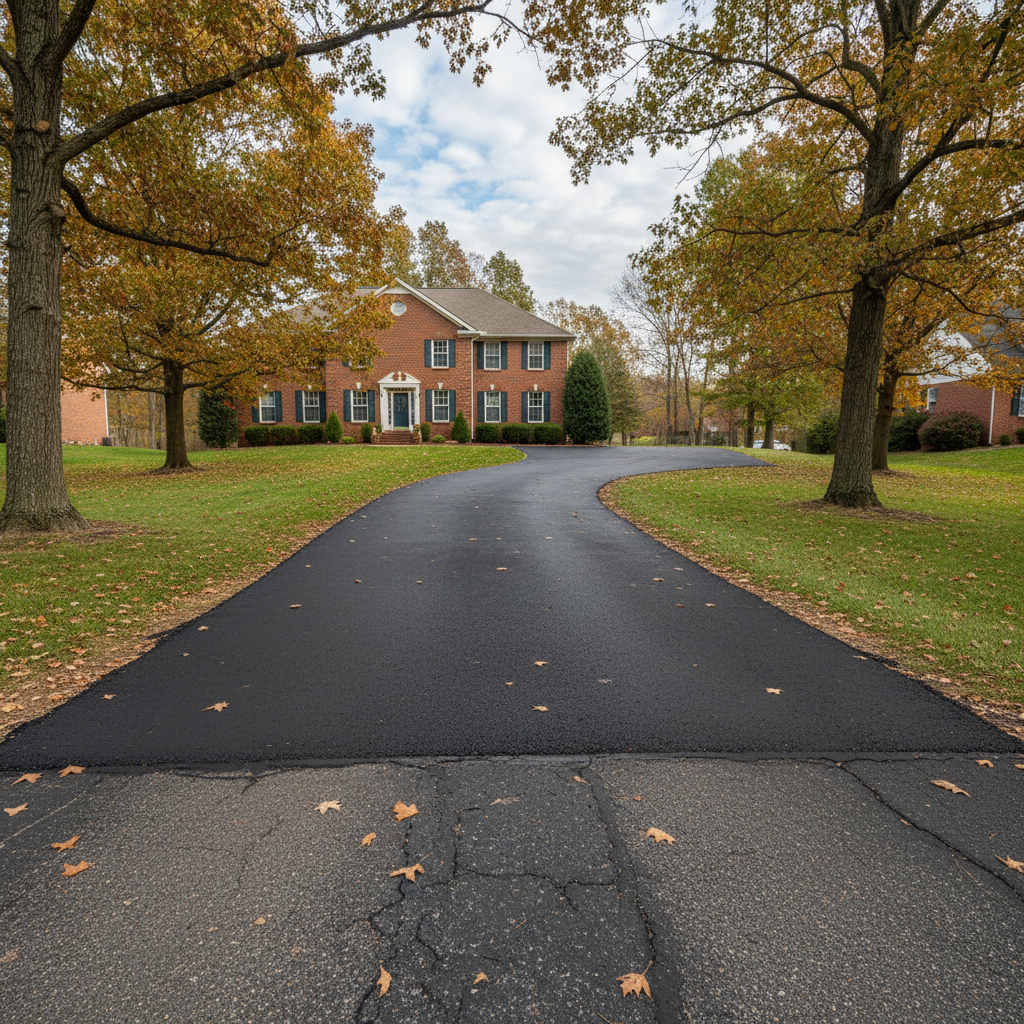
Got a pothole? Or maybe a spiderweb crack that just keeps growing? You know you need to get it taken care of, but when's the best time? And does the weather really matter that much? Oh, it absolutely does, especially here in Louisville.
I've been doing this for a long time, and I can tell you, patching asphalt isn't just about dumping some hot mix down. It's about making sure it bonds correctly, so it can actually last through our wild Kentucky weather. And that means paying close attention to the calendar and the forecast.
When to Schedule Your Asphalt Patching
Let's talk about timing. Generally speaking, the perfect time for asphalt patching is during the warmer months. Think late spring, summer, and early fall. Why then?
- The material needs heat: Hot mix asphalt, which is what we use for most patches that actually last, needs to go on hot and stay warm enough to get compacted just right.
- Better adhesion: The old pavement needs to be warm enough for the new stuff to stick. If the pavement's too cold, the patch can cool off too fast, leading to weak adhesion and a patch that just won't hold up.
- Curing time: While asphalt doesn't 'cure' like concrete does, it still needs some time to settle and compact under traffic and temperature. Warm weather really helps this along.
So, if you're staring at a pothole in February, you might be thinking, 'I need this fixed right now!' And believe me, I get it. We can do temporary cold patches in a pinch during winter, but they are just that — temporary. They'll get you by, but they won't last. For a repair that's truly going to stand the test of time, you're better off waiting for those consistent 50-degree days and above.
Weather Conditions That Affect the Work
Beyond just temperature, other weather factors play a huge role. You can't just ignore them and expect things to turn out well.
- Temperature: I've already mentioned this, but it's worth saying again. We need the air temperature to be steadily above 50°F, and ideally, the ground should be about the same. If it's too cold, the asphalt cools way too fast, making it brittle and tough to compact. What happens then? You end up with a patch that's much more likely to crack or fall apart.
- Rain and Moisture: This is a big one, perhaps the biggest. You absolutely cannot patch asphalt on wet pavement. Water stops the new asphalt from sticking properly to the old. It'll create a weak spot, and that patch will fail. We need dry conditions, and not just for the surface. If the ground underneath is soaked, that's a whole other problem we need to tackle before any patching can happen. Even if it's not raining right then, if it's been pouring for days, the ground might just be too wet.
- Extreme Heat: While some warmth is good, really high heat can also be tricky. When it's 95 degrees and humid, like it often is here in Louisville in July and August, the asphalt can stay too soft for too long. This makes it prone to rutting if cars drive over it too soon. We adjust our mixes and techniques for this, but it's something we're always keeping an eye on.
Honestly, sometimes we have to reschedule. It's not because we don't want to get your job done; it's because we want to do it correctly. If I show up and it's raining or the ground's soaked, I'm going to tell you we need to wait. It's always better to delay a day or two than to put down a patch that's going to crumble in just a few months.
Protecting Your Investment Year-Round
Once those patches are done, you want them to last, right? Here's what you can do to protect your asphalt all year, especially with our Kentucky freeze-thaw cycles:
- Keep it Clean: Debris, dirt, and leaves can trap moisture on your pavement. This moisture can then seep into tiny cracks, freeze, expand, and turn those small cracks into big potholes. A regular sweep or blow-off really helps.
- Address Drainage: Make sure water isn't pooling on your driveway or parking lot. If you've got low spots where water sits after a rain, that's a prime area for things to go bad. Sometimes a small drainage fix can save you a lot of money on repairs later on.
- Sealcoating: Think of this as your asphalt's sunscreen and raincoat. A good sealcoat every few years protects the asphalt binder from UV rays, water getting in, and even minor chemical spills. It's a preventative step that extends the life of your whole pavement, including those new patches.
- Don't Ignore Small Cracks: Those tiny hairline cracks? They're not just cosmetic. They're basically open doors for water. Get them filled with crack sealer before they become bigger headaches. This is super important before winter hits. Water gets in, freezes, expands, and BAM – you've got a pothole. We see this all the time in older neighborhoods, like the Highlands, where some of those driveways have seen a lot of winters.
- Watch for Heavy Loads: If you've got heavy trucks or equipment on your asphalt, be careful. Repeated heavy loads in the same spot can cause rutting and cracking, even on pavement that's been well-maintained.
At Absolute Asphalt Co, we're not just here to patch your pavement; we're here to help you figure out how to make it last. Don't hesitate to give us a call if you have questions about your specific situation. We're always happy to take a look and give you an honest assessment.