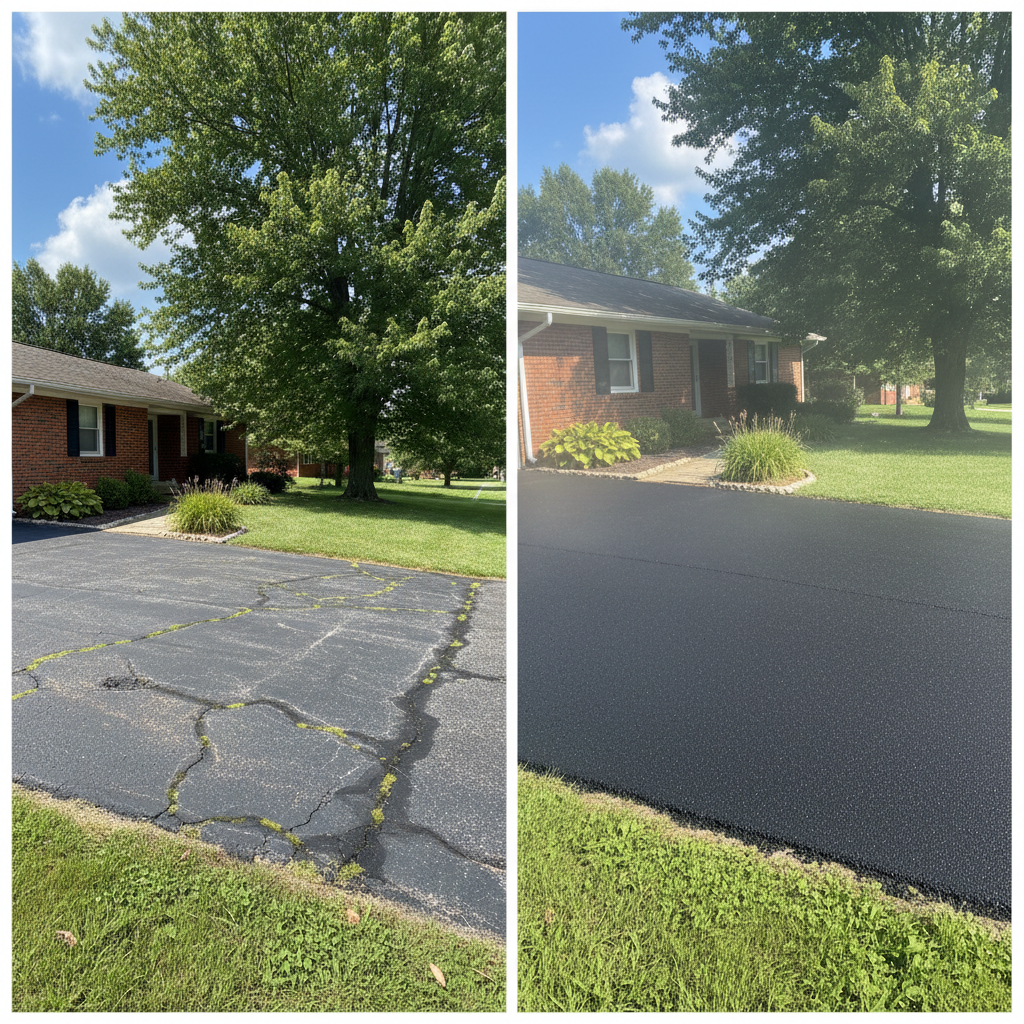
Your commercial asphalt parking lot or private road looks pretty rough, doesn't it? Cracks, potholes, maybe even some standing water. You know it's time to fix things, but what's the best way? For many property owners, the big question boils down to two main options: an asphalt overlay or a full tear-out and replacement. I see this decision come up all the time with folks around here, from the Highlands to Prospect. Let's dig into what each means for your property and, of course, your wallet.
What's an Asphalt Overlay?
Think of an overlay as putting a fresh new skin on your existing asphalt. We're talking about laying a new layer of asphalt—usually 1.5 to 2 inches thick—right on top of your old, worn-out surface. Before we do that, though, we've got to get the old stuff ready. That means patching up any serious potholes, filling major cracks, and sometimes milling down high spots or the edges where it meets concrete or other surfaces. It's kind of like putting a new coat of paint on a wall; you still need to sand and patch it first, right?
What's a Full Tear-Out and Replacement?
This one's pretty straightforward. It's exactly what it sounds like: we completely remove all the old asphalt, dig down to the base layer, and then rebuild everything from scratch. We're talking about taking out the old asphalt, checking the sub-base (that's the dirt and gravel underneath), making any necessary repairs or improvements to that base, and then laying down all new asphalt layers. This is a much more involved process, obviously.
Cost: The Big One
Let's be real, cost is usually the first thing on everyone's mind. An overlay is almost always going to be significantly cheaper upfront than a full replacement. You're saving a ton on demolition labor, hauling away old material, and often on the amount of new material needed. If your existing base is still solid, an overlay can be a really cost-effective way to get a great-looking, functional surface. A full replacement, on the other hand, involves a lot more heavy machinery, more labor, and more material. You're paying for a brand-new foundation, essentially.
Durability and Lifespan
This is where the 'why' behind the cost difference really matters. An overlay, when done right on a suitable base, can give you another 8-15 years of good service. It's durable, it looks great, and it protects your underlying structure. But here's the kicker: an overlay is only as good as the base it's laid on. If your existing asphalt has widespread structural failures—I'm talking about alligator cracking across large areas, significant heaving, or major drainage issues that have compromised the sub-base—then an overlay is just a band-aid. Those underlying problems will eventually telegraph through the new layer, and you'll be right back where you started, sometimes in just a few years. It's like putting a new roof on a house with a rotten foundation; it's just not going to last.
A full replacement? That's the gold standard for durability. When we tear everything out, we get to inspect and fix any issues with the sub-base. We can ensure proper drainage and compaction from the ground up. This means a properly installed full replacement can easily last 20-30 years, sometimes even longer, with good maintenance. It's built to last because it has a brand-new, solid foundation.
Maintenance Needs
Both options benefit from regular maintenance, like sealcoating every 2-5 years and prompt crack filling. For an overlay, keeping up with maintenance is crucial to maximize its lifespan, especially since it's relying on an older base. For a full replacement, maintenance helps protect your significant investment and keeps it looking new for decades.
Appearance
Both an overlay and a full replacement will give you a beautiful, smooth, black surface initially. The difference comes down to how long that appearance holds up if there are underlying issues. With an overlay, if the base is failing, you might see reflective cracking (where old cracks reappear through the new layer) sooner. A full replacement, with its fresh start, offers the best chance for a consistently smooth and unblemished surface over the long haul.
When to Choose Which in Louisville
Alright, so how do you decide for your property here in Louisville? We get all four seasons, sometimes in one week, and that constant freeze-thaw cycle can be brutal on asphalt. Plus, we've got some areas with clay soils that can shift and cause problems if the base isn't properly prepared.
Choose an Overlay if: Your asphalt has surface-level problems like minor cracking, fading, or shallow potholes, but the overall structure feels solid. You don't have widespread alligator cracking or serious drainage issues. You're looking for a more budget-friendly solution to extend the life and improve the look of your pavement for another decade or so. This is a great option for many commercial properties that just need a refresh.
Choose a Full Replacement if: Your asphalt is showing significant structural distress. We're talking widespread alligator cracking, deep potholes, areas that are constantly sinking or heaving, or major drainage problems that have compromised the sub-base. If your parking lot feels like a roller coaster, an overlay won't fix the root cause. You want the longest-lasting solution and are prepared for the higher upfront investment. For properties with heavy traffic or critical importance, a full replacement often makes the most sense.
Look, I've seen too many folks try to save a buck with an overlay when they really needed a full replacement, only to end up paying more in the long run. And I've also seen people spend big on a full replacement when a well-executed overlay would've been perfectly fine. The key is a thorough assessment of your existing pavement. That's where Absolute Asphalt Co. comes in. We'll come out, take a look, and give you an honest opinion about what's going on underneath and what the best long-term solution is for your specific situation. Don't guess; let's figure it out together.